
Why Carlo Rossi Just Feels at Home on the Filipino Table
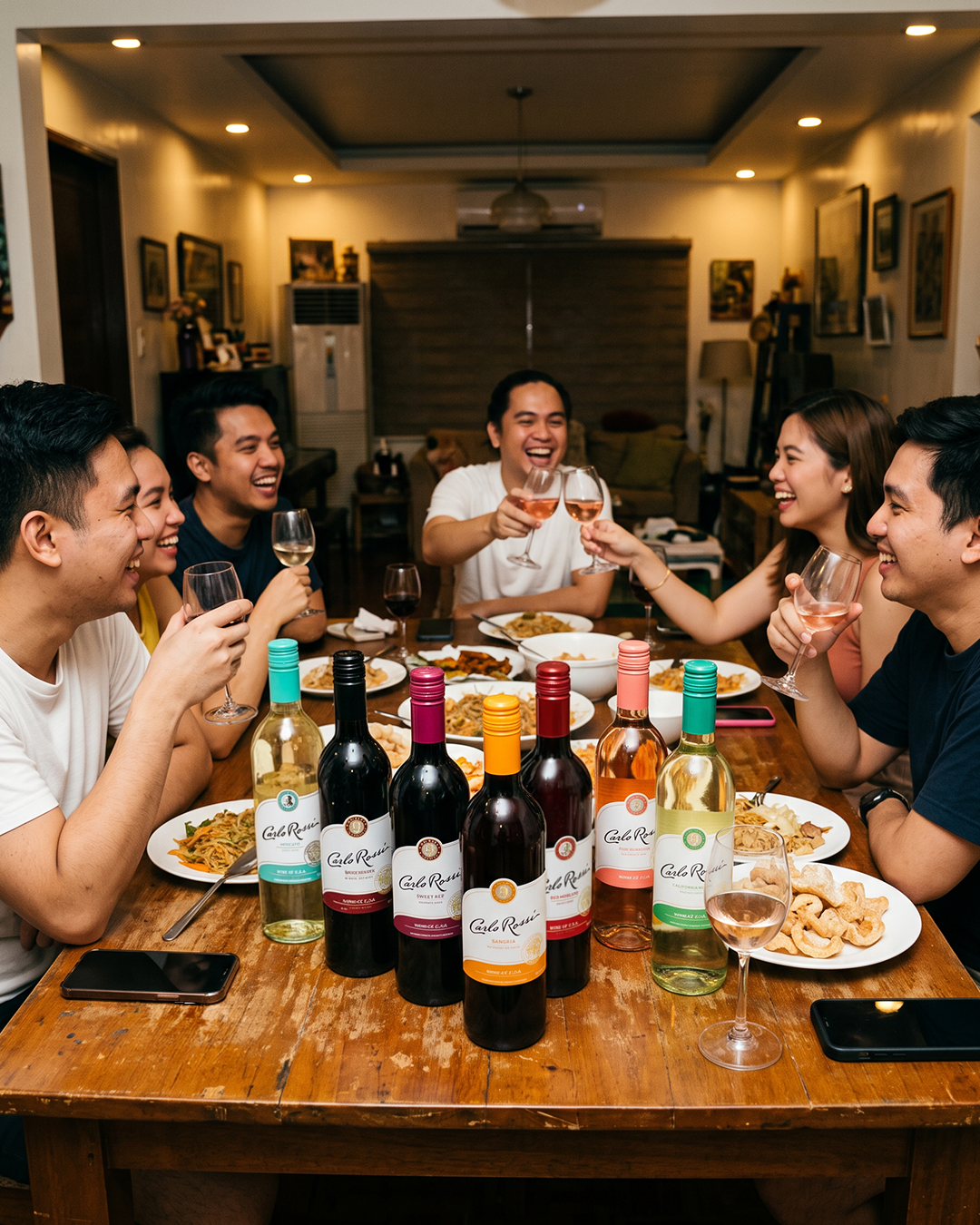
Ask any Filipino how long dinner was supposed to take… then ask how long it actually took. The answers? They’ll never match. And honestly, that gap is the whole point.
Someone starts telling a story, and boom—two more people jump in. Another person suddenly gets up and starts scooting pots around like, “Oh, we need more food,” for no real reason. Plates get passed, rice disappears, and before anyone even clocks it, the night’s already slipped away. You look up, and it’s like, “Wait, what time is it?” But nobody’s leaving. Because that’s how it goes. The table just stretches time to fit the people.
Everything’s been cleared away, and the food is long gone, yet here we are, still glued to our seats. The room is just buzzing with good energy and non-stop chatter. It’s like the table knew we needed this, holding space for all of us just to lose track of time. When you finally notice how dark it’s gotten outside, it hits you that tomorrow is going to hurt. But in the moment? You couldn’t care less.
More Than Food: Why the Table Matters
You can’t put a time limit on a night like this. It’s not even mostly about the menu—though, let’s be real, the food is always worth writing home about, and nobody’s turning down a second helping. The whole point is the stuff you can’t script.
It’s your cousin busting through the door late and suddenly turning into a stand-up comedian. It’s your tito dusting off his go-to punchline for the hundredth time and somehow making it hit perfectly. And the best part? Your quiet aunt, halfway through her second round of food, casually reveals a secret history nobody at the table knew about.
Over extra rice and a stray slice of dessert, grudges soften, plans are made, and small victories are toasted like big ones. The Filipino table is where ordinary moments collect weight and shape into something you remember.
A Table That Demands Versatility
Filipino food is definitely not known for being subtle. You’ve got bagoong punching you in the face, sinigang making your mouth water, kare-kare bringing all the rich flavor, and a crispy pata that honestly rules the entire table.
Finding a wine brand that doesn’t get utterly bullied by those flavors is usually tough, but it doesn’t have to be stressful. You just need a bottle that keeps its cool, doesn’t overcomplicate things, and goes with the flow.
A Bottle That Fits In
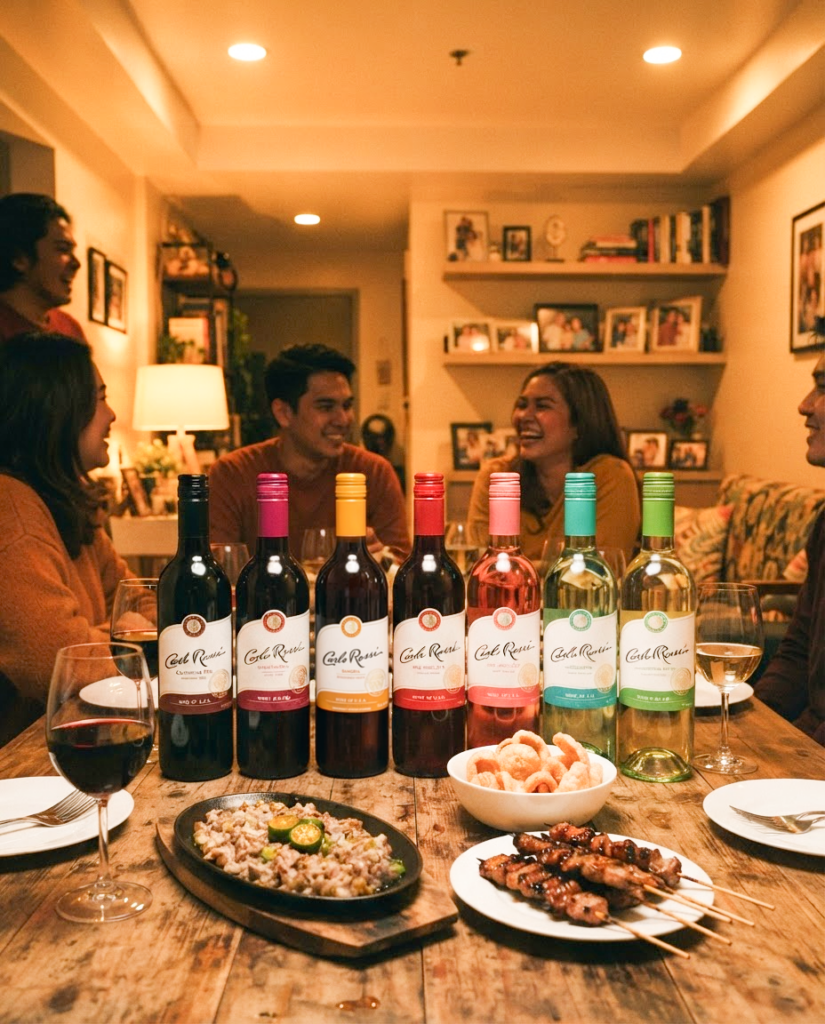
When the whole clan shows up, you already know a bottle of Carlo Rossi is making an appearance. It’s just a staple at this point. Why? Because it’s completely comfortable in its own skin. It doesn’t try too hard, keeps the conversation lively, and completely strips away pretentiousness. It’s the kind of wine that reminds you that you can’t actually “do wine wrong” as long as you’re having a good time.
Pair the California Red with a hearty adobo or a rich kare-kare, and let that smooth, fruity warmth do its thing against those intense savory sauces. It just works! Then, the second the vibe feels light and happy—and you look up to find plates of dessert and halo-halo suddenly taking over the table—that’s when you pop the Pink Moscato. By the time you reach the end-of-the-night sing-songs and those classic, deep late-night kwentuhan sessions, it’s time for the Sweet Red. Its gentle sweetness keeps everyone in high spirits, making everything effortless and down-to-earth.
Earned, Not Taught: The Experience That Matters
Honestly, nobody’s trying to sound like a wine expert here. When we say a bottle of wine pairs well with Filipino food, it just means it’s bagay.
It’s that reliable old friend that families reach for season after season. It’s a staple for lively town fiestas and completely relaxed Sundays at home. You always see it making the rounds at weddings, provincial reunions, and Noche Buena, just blending into the background while everyone enjoys their food and talks the night away.
In families where recipes are passed down through generations, and you’re always squeezing in another chair for a surprise guest, that one bottle on the table becomes a tradition of its own.
It’s not about looking fancy or reading a label. It’s chosen simply because it feels right—a little symbol of comfort, familiarity, and that pure happiness that takes over the room when everyone is finally back together.
Made for Spontaneity
That presence matters because family gatherings in the Philippines rarely stick to plans. A casual dinner can grow into a weekend. Noche Buena rarely ends on the 24th; conversations and leftover rice keep the celebration alive. Even the simplest weekday dinner can stretch into a celebration the moment someone says, “Tara, inuman na.”
What you bring should be invited into that spontaneity, not an obstacle. A bottle that’s easy to understand, easy to enjoy, and easy to share keeps the focus where it should be: on people.
Bring What’s Bagay
If there’s one thing to remember, it’s that a Filipino table never really fills up—there’s always space for another plate, a random chair, a silly joke, or a long story. The things that belong there are the ones that don’t need a grand introduction. They just slip onto the table, add to the warmth of the evening, and before you know it, they’ve quietly become part of the memories you hold onto.
Carlo Rossi has earned that spot in so many homes for that exact reason. It never demands attention; it just listens to the rhythm of the night and pours itself accordingly. It’s just, well… completely bagay on the Filipino table.
Which Bottle Tonight?
So, the next time you’re setting a table, whether it’s an elaborate fiesta spread, a quiet family meal, or a last-minute inuman with friends, consider what fits there. Bring something that keeps the conversation going, the laughter loud, and the night long. Bring the brand that’s been at more tables than most people can count.
The only question is: which Carlo Rossi variant will you be popping open first?
© 2026 Carlo Rossi. All rights reserved.